


If you have significant career gaps or limited work experience, a resume format that focuses on your skills can be especially beneficial — and that’s exactly what a functional resume does.
In this article, we’ll explain what a functional resume is, provide templates and examples, and show you how to write one yourself.
What is a functional resume?
A functional resume is a format that focuses on your relevant skills rather than your work history.
Also known as a skills-based resume, this format groups your professional abilities into categories that are directly relevant to the job.
Each category is followed by bullet points that provide examples of your achievements using that skill.
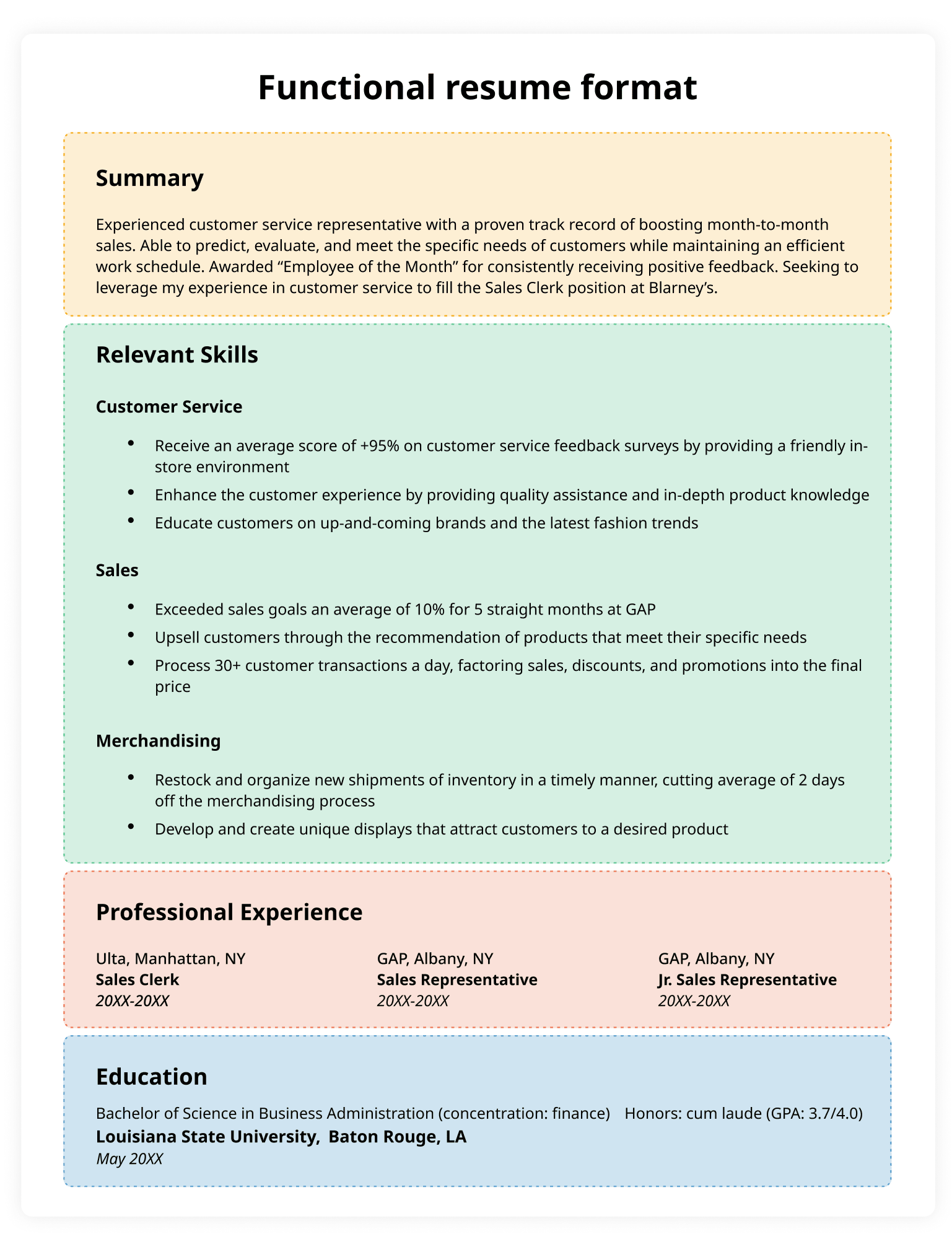
Like a chronological resume, a functional resume still includes a list of your previous jobs. However, this section is much shorter and less detailed than it would be on a chronological resume.
As a result, a functional resume helps your transferable skills stand out.
Functional resume template (text format)
The simplest way to start building your functional resume is with this text-based template you can immediately copy and customize.
FIRST AND LAST NAME
Email: youremail@gmail.com | Phone: (123) 456 7891
Address: 123 Washington Drive City, State 12345
Linkedin: linkedin.com/in/yourprofile
Resume Summary
[Industry] professional with [# of years] years of experience. Looking to use my expertise in [relevant skills] to fill the [Position Title] position at [Company Name]. Possess a [degree] in [area of study] and skills in [relevant skill]. A dedicated worker aiming to help achieve [Company’s Name]’s goals and take on more responsibility as soon as possible.
Relevant Skills
[Skills Category 1]
- Group 2-3 related skills under each category heading
- Provide concrete examples of results you’ve achieved using these skills
[Skills Category 2]
- Choose skills that directly match the job requirements
- Include measurable results like percentages, dollar amounts, or time saved
[Skills Category 3]
- Use action verbs and specific numbers to demonstrate your impact
- Be specific about tools, methods, or certifications that prove your expertise
Work Experience
Current Job Title
Employer Name / Location
Start Date – End Date
Earlier Job Title
Employer Name / Location
Start Date – End Date
Education
Degree Name / Major
University, Location | Start Date – End Date
Functional resume examples
Below are some pre-written examples of functional resumes for different life situations that you can download and edit to match your skills and experience.
You can find resumes written for hundreds of specific jobs in our full collection of resume examples.
1. Early-career resume example
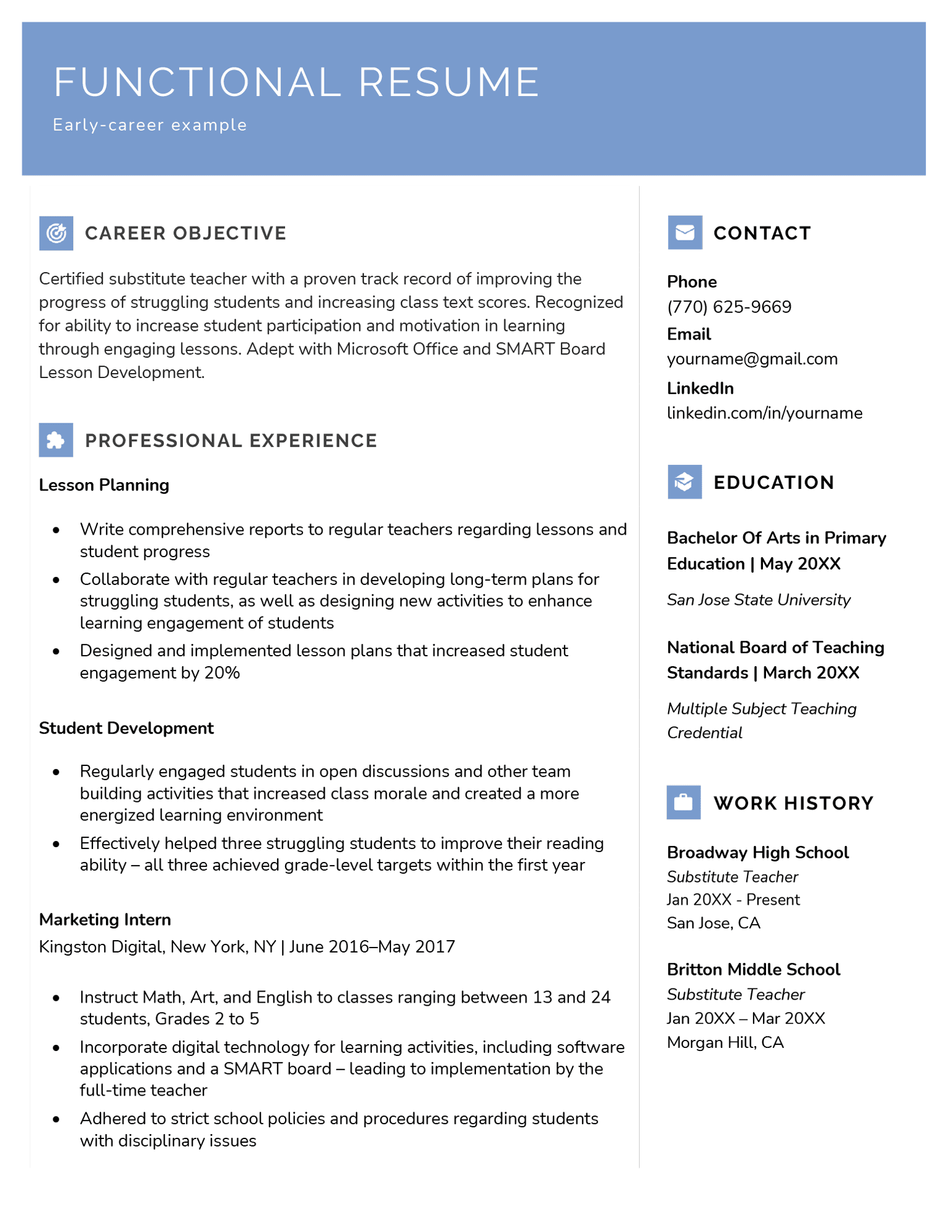
If you’re just starting your career, a functional resume format lets you build your resume around a strong skills section that highlights your top abilities.
To make an even stronger impression, use results-focused bullet points that highlight quantifiable achievements. This makes it easy for employers to see the impact you can make.
Graduating?

2. Career gap resume example
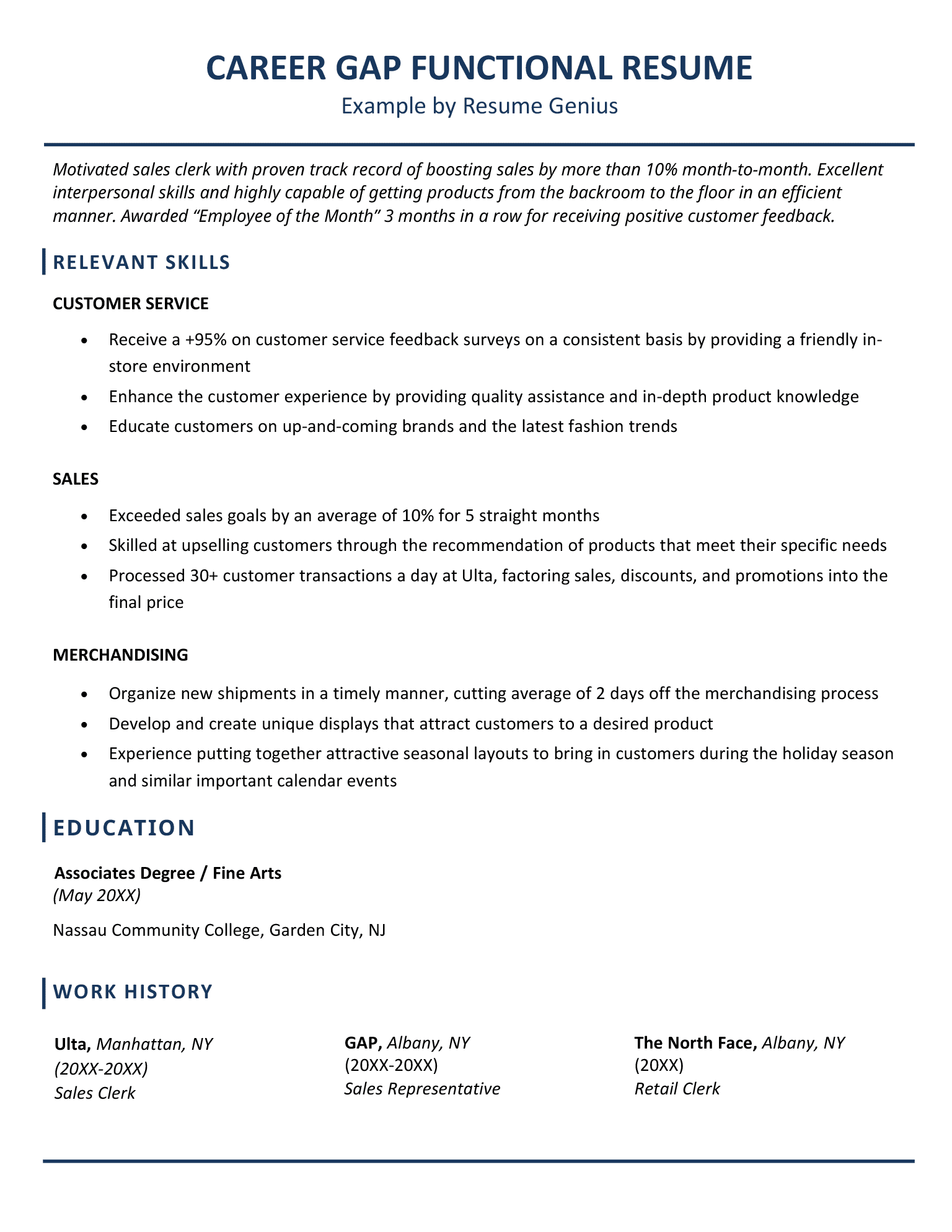
This resume template is a great example of how to explain employment gaps.
The work experience section lists only the years worked for each job, rather than the specific months, which is an effective way to minimize attention to extended periods of unemployment.
3. Career changer resume example
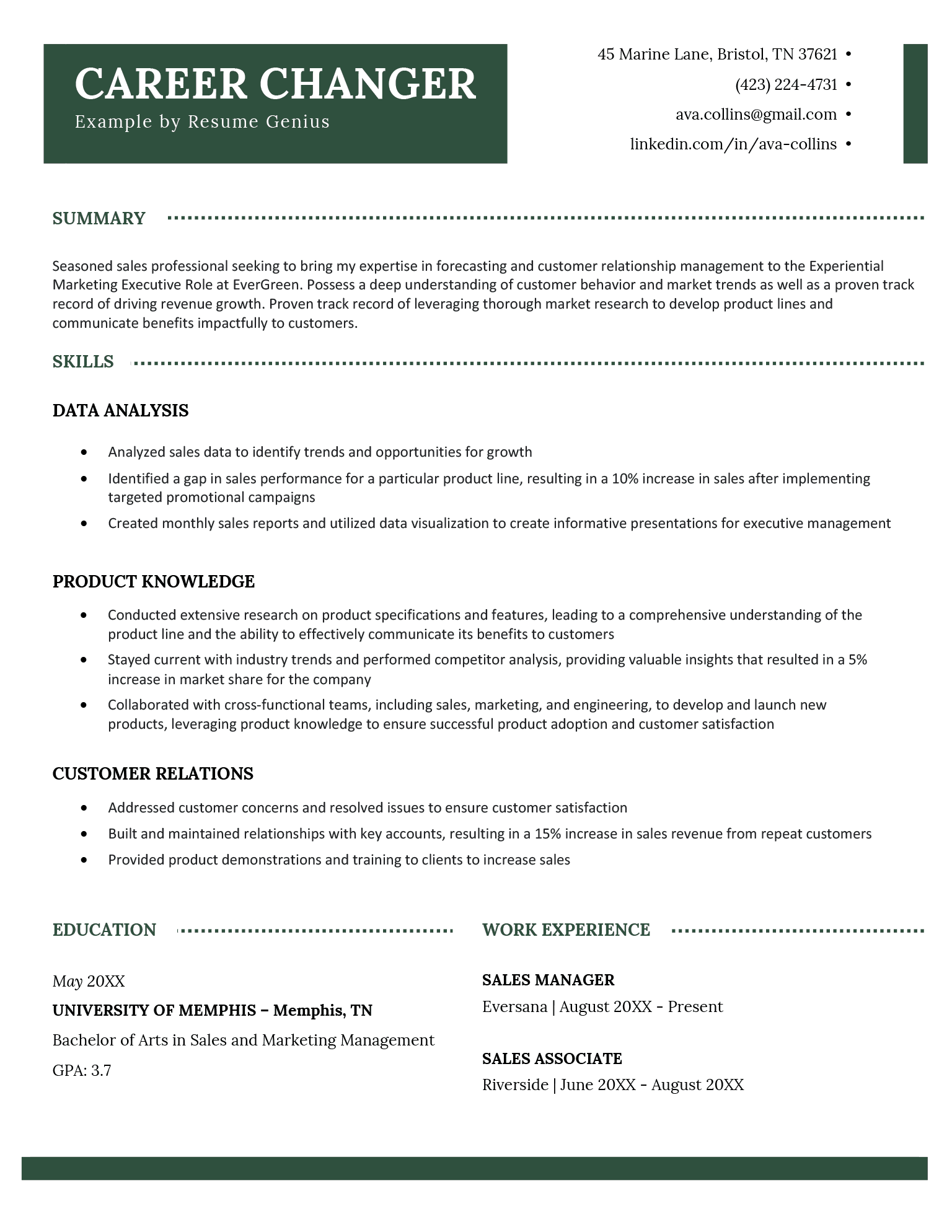
If you’re writing a career change resume, a chronological format can be problematic because it may make your work experience seem irrelevant.
Instead, using a functional format that emphasizes your transferable hard skills highlights the value you can bring to your new field.
4. Returning to work resume example
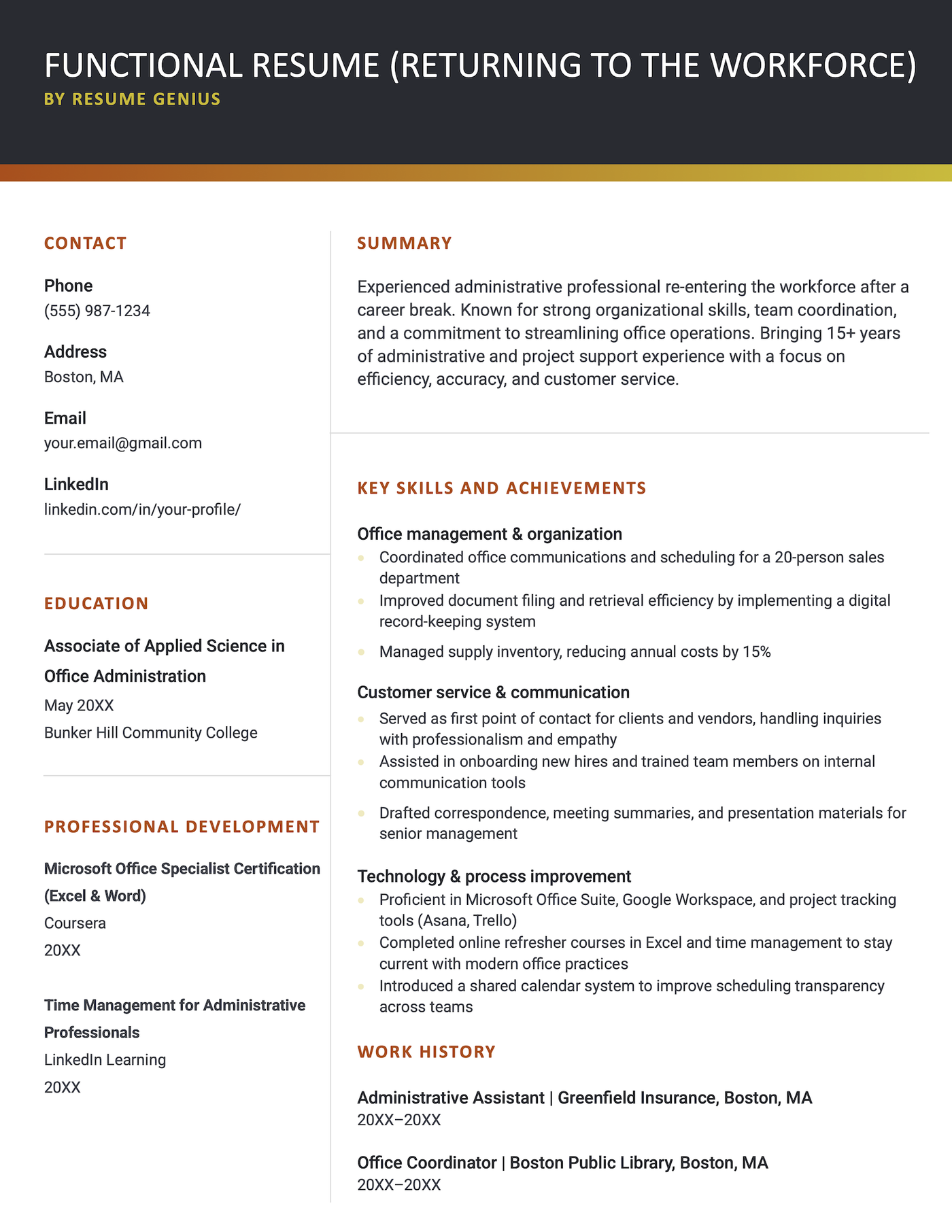
This resume template shows how to highlight transferable skills when you’re returning to the workforce after a career break.
Functional resume templates (free downloads)
These free functional resume templates offer the basic structure to help you create a skills-focused resume from scratch.
Choose your favorite, download it, and fill it in with your own information.
You can find more designs in our resume template library.
Compact resume template
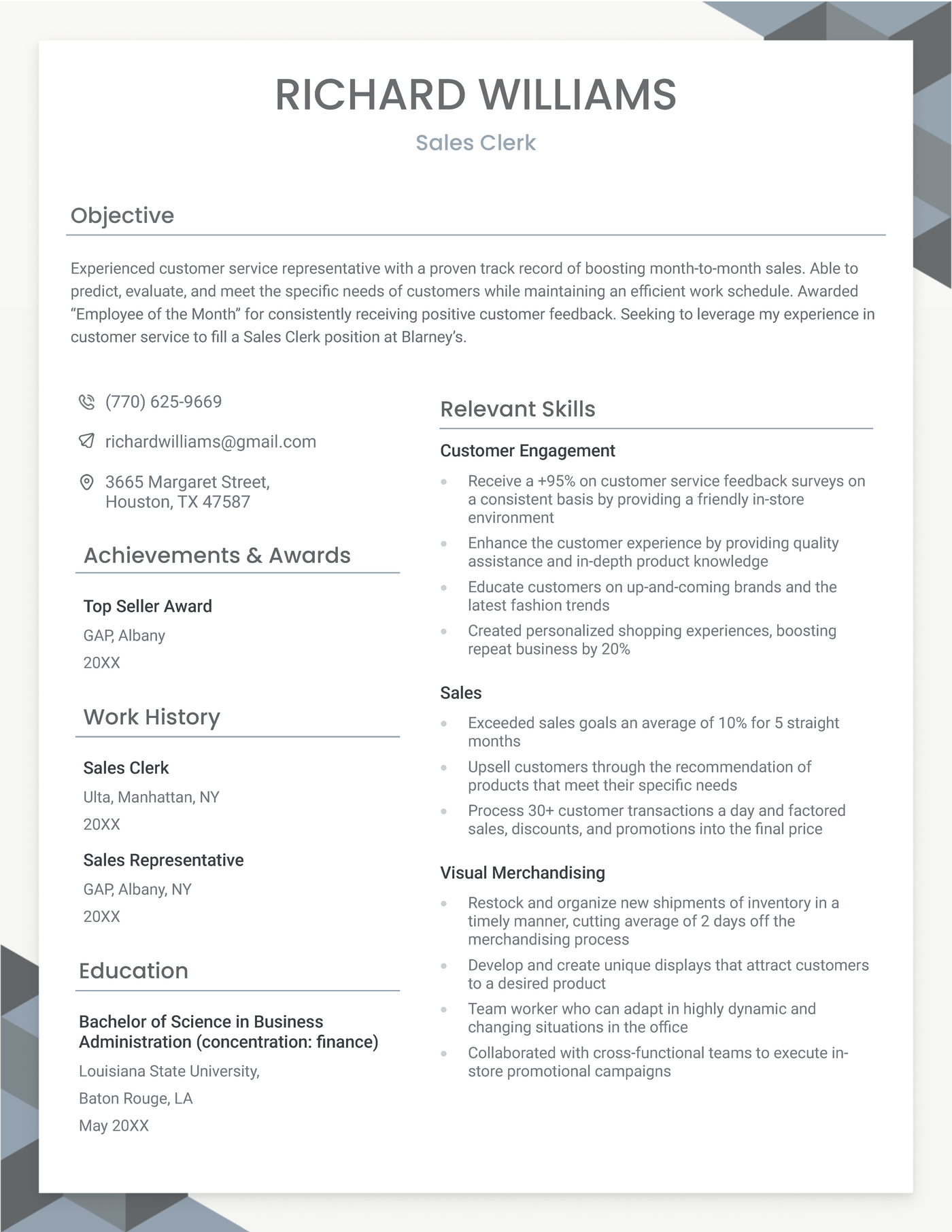
This modern template uses a clean, two-column layout to showcase your key skills.
Flexible resume template
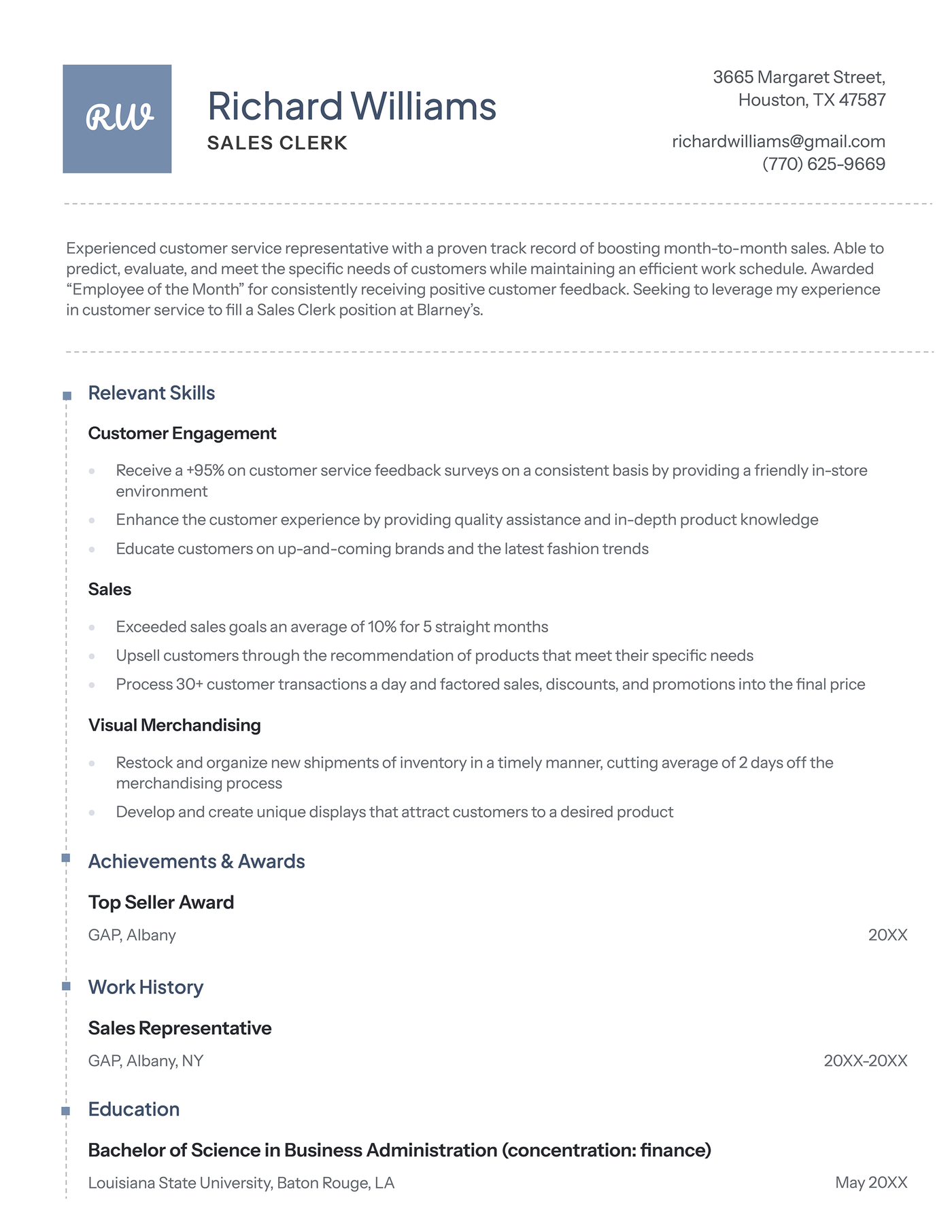
Add your professional headshot to the top-left corner to personalize this clean, line-accented template.
Haslam resume template
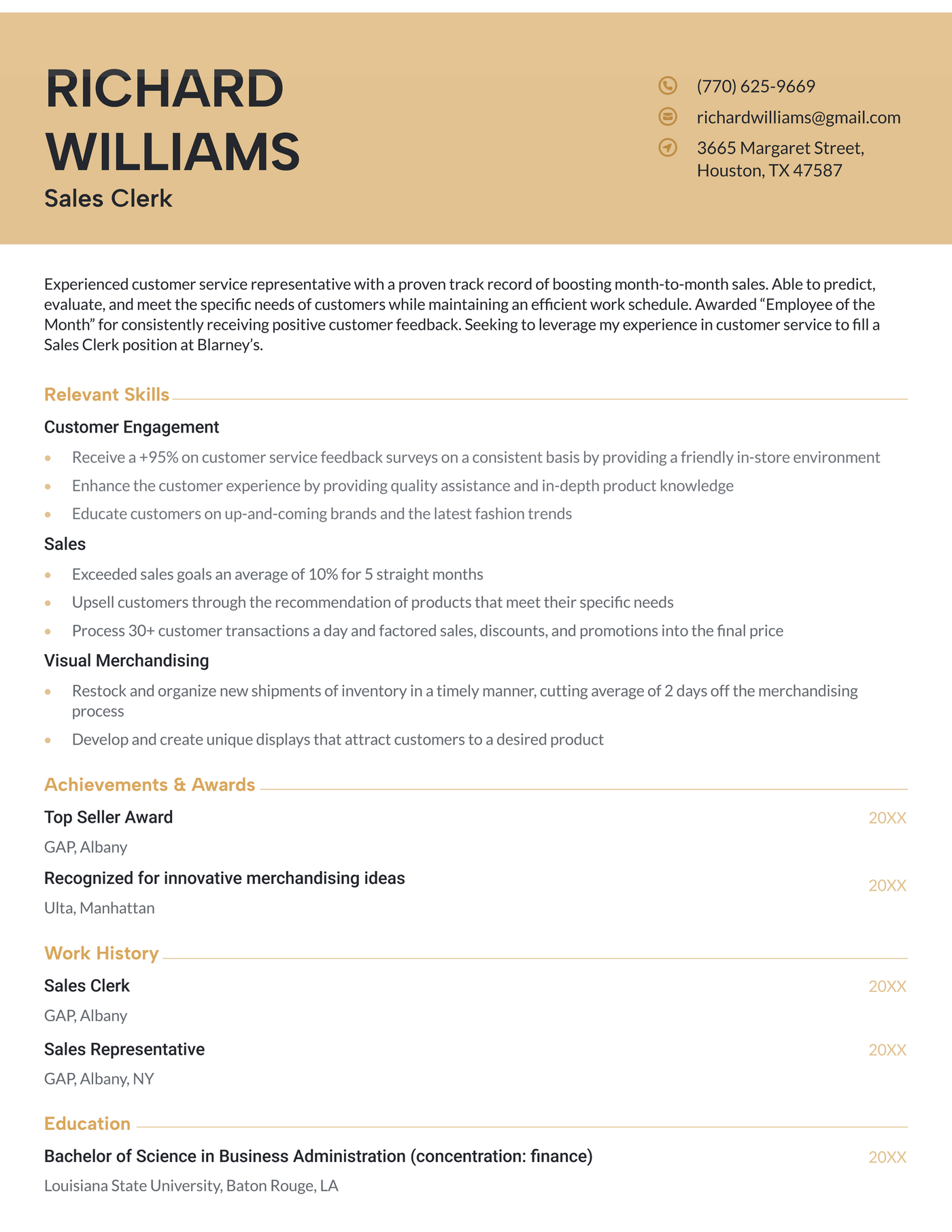
This bold template uses bright colors and a prominent top banner to make an immediate impression.
Strong resume template
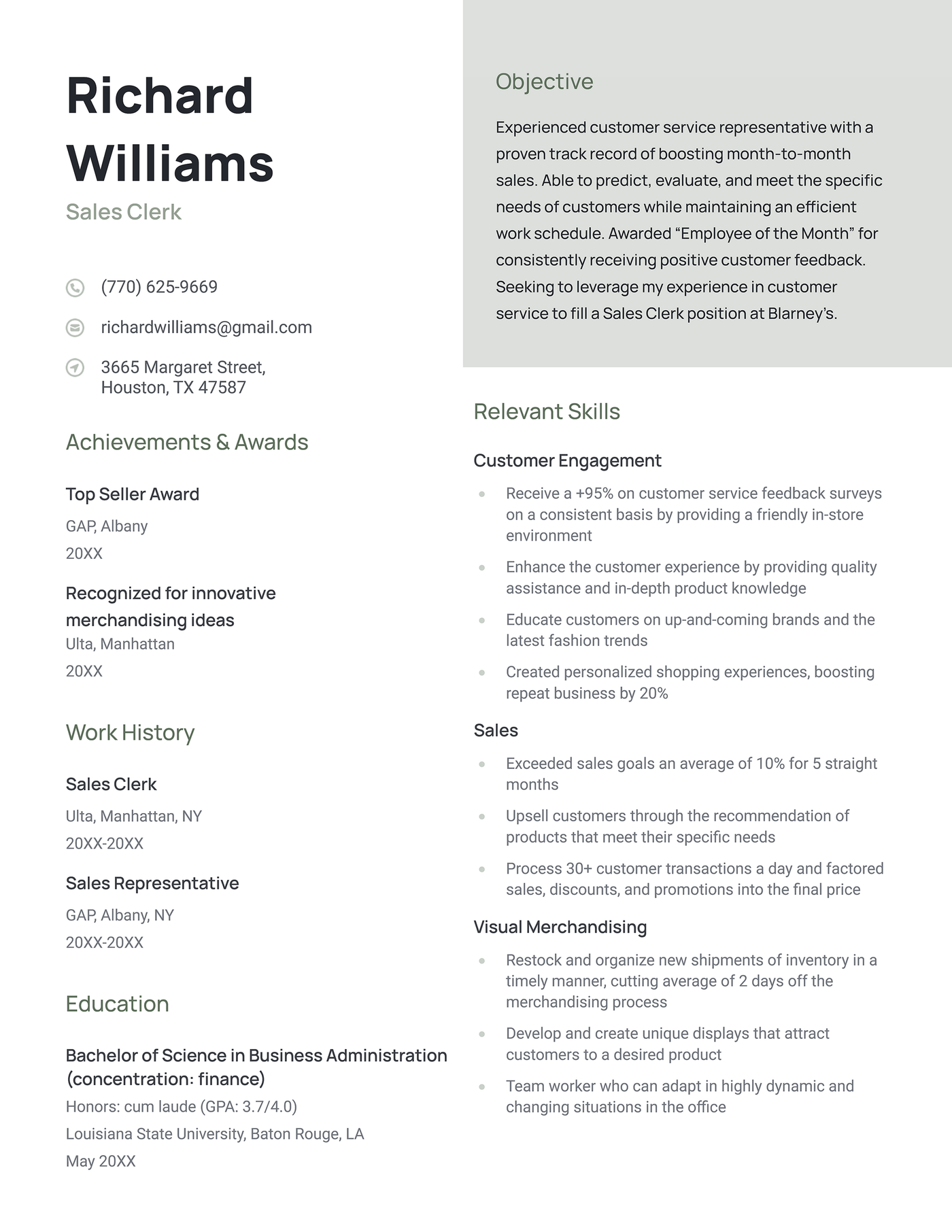
This functional resume template brings attention to your resume objective, helping you frame your skills and goals right at the top.
How to write a functional resume
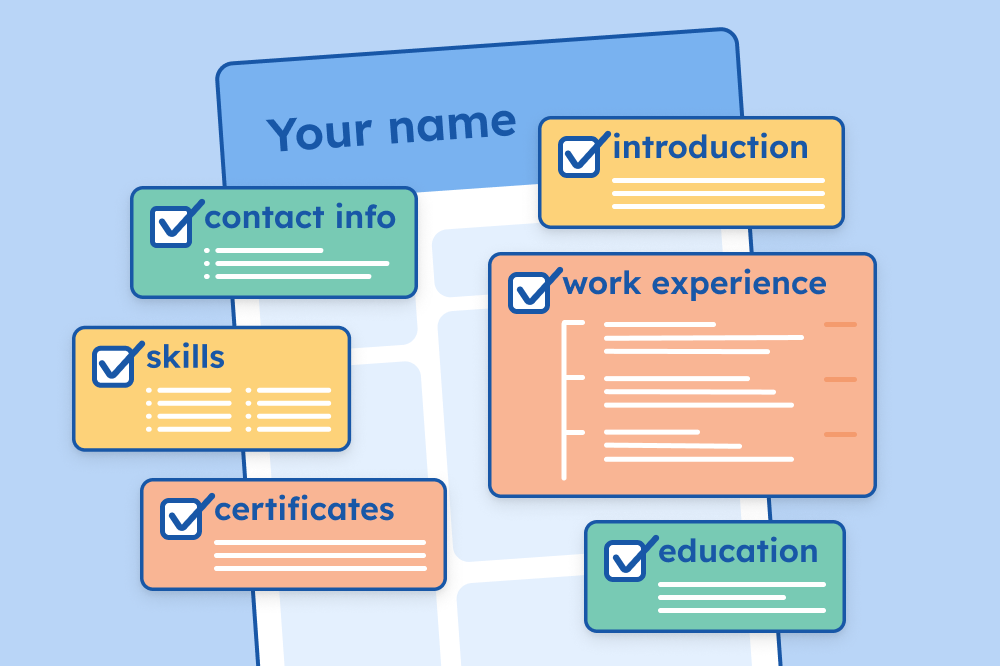
Writing a functional resume differs slightly from writing a standard resume. Here’s everything you need to know, step-by-step:
Write a detailed introduction
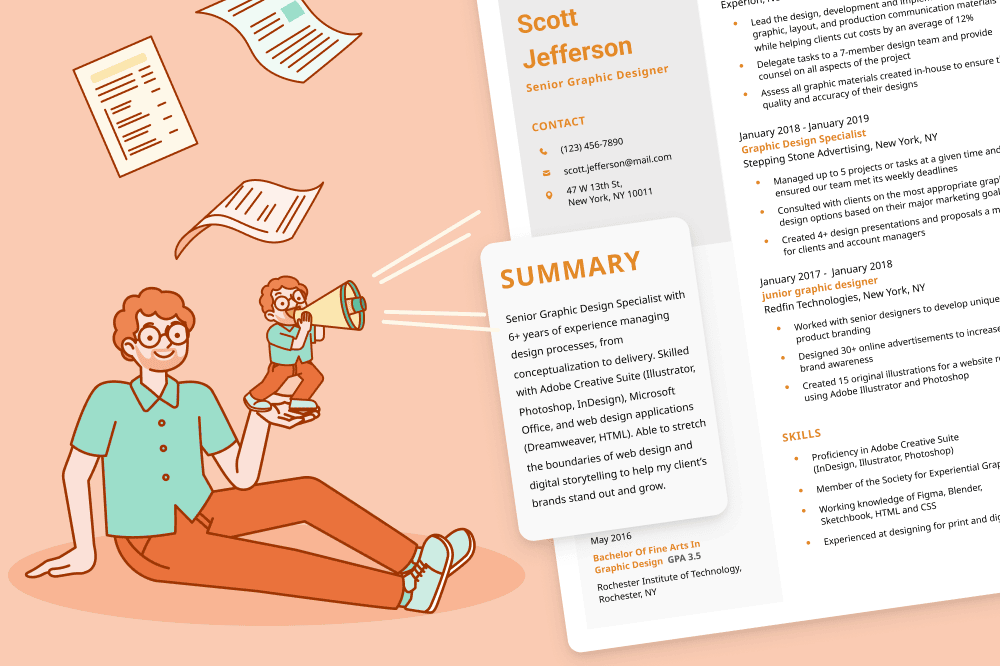
A convincing resume summary immediately draws the employer’s attention to your most relevant skills, making your job history less of a focal point.
Start your summary by briefly stating who you are and your area of expertise. Then, give 2–3 examples of relevant achievements that demonstrate your qualifications. Finally, explain why you’re applying for the job.
Here’s an example:
Conscientious administrative assistant with 4+ years of experience providing executive-level support. Introduced inventory supply software and saved 5% in costs. Highly proficient with QuickBooks.
Quickly get a great introduction for your functional resume by letting a resume summary generator do the hard work for you.
Group your skills by type
Next, categorize your skills by type:
- Read the job description and identify the skills the employer is looking for, grouping them into 3–5 categories
- Organize your skills into similar groups to include in your skills section
- After each skill group, add 3–4 bullet points highlighting what you’ve achieved with those skills
For example:
CUSTOMER SERVICE
- Receive a +95% on customer service feedback surveys on a consistent basis by providing a friendly in-store environment
- Enhance the customer experience by providing quality assistance and in-depth product knowledge
- Educate customers on up-and-coming brands and the latest fashion trends
SALES
- Exceeded sales goals an average of 10% for 5 straight months
- Upsell customers through the recommendation of products that meet their specific needs
- Process 30+ customer transactions a day and factored sales, discounts, and promotions into the final price
MERCHANDISING
- Restock and organize new shipments of inventory in a timely manner, cutting average of 2 days off the merchandising process
- Develop and create unique displays that attract customers to a desired product
- Team worker who is able to adapt in highly dynamic and changing situations in the office
Add your work history
Write a brief history of your work experience.
On a functional resume, you only need to include these basic details for each job:
- Job title
- Company name
- Employment dates (optional)
If you include employment dates, list your jobs in reverse chronological order. If not, list them in order of relevance to the job you’re applying for.
Here’s an example of what a work history section looks like on a functional resume:
Ulta, Manhattan, NY
20XX–20XX
Sales ClerkGAP, Albany, NY
20XX–20XX
Sales RepresentativeThe North Face, Albany, NY
20XX–20XX
Retail Clerk
If you’re writing a resume for your first job and don’t have work experience yet, include volunteer work, school roles, or personal projects.
List your relevant educational background
Unless your education section directly relates to the job you’re applying for, only include the name of your university or organization, the city and state, the degree you earned, and your GPA (if it’s above 3.5).
Here’s an example of how to list your educational background on a functional resume:
Bachelor of Arts in Primary Education
San Jose State University, May 20XX
National Board of Professional Teaching Standards
Multiple Subject Teaching Credential, March 20XX
Frequently asked questions about functional resumes
Here are answers to some of the most commonly asked questions about functional resumes:
When should I use a functional resume?
You should use a functional resume in the following situations:
- You need to address long periods of unemployment
- You’re switching to a new career and don’t have much relevant experience
- You want to highlight specific professional skills rather than your work history
By focusing on your skills, a functional resume emphasizes the value you offer employers and shifts attention away from your work history.
What’s the difference between a functional resume and a chronological resume?
A functional resume highlights your skills and accomplishments grouped by category, while a chronological resume emphasizes your work history in reverse chronological order. The functional format is ideal if you’re changing careers, have large employment gaps, or want to direct attention to specific skills rather than job titles.
Do employers like functional resumes?
Some employers find functional resumes harder to assess because the work history is less detailed. However, when done well — especially with clear skills categories and quantifiable results — they can still be very effective.
Can I use a functional resume if I have an extensive work history?
You can, but a combination resume might be a better choice, because it blends skills-based highlights with a chronological work section to give employers a more complete picture of your background.
How do I choose which skills to feature?
Focus on skills that align with the job description. Use the job ad to identify what the employer values most, and highlight those strengths with examples and achievements.
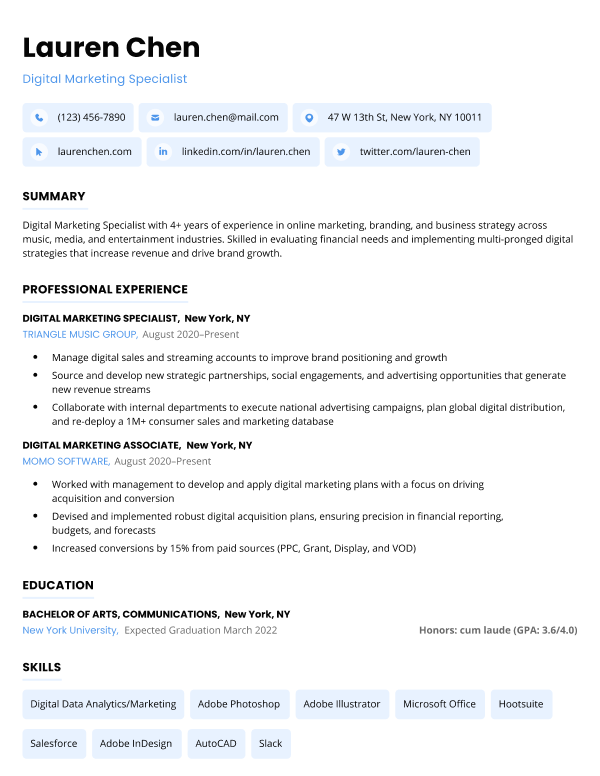
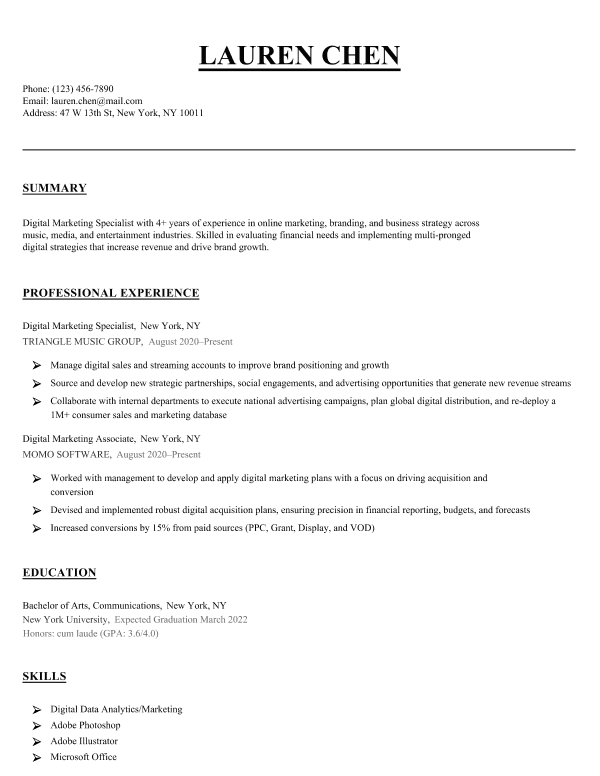
Our resume builder can make you a resume in as little as 5 minutes. Pick the template you want, and our software will format everything for you.
Click to rate this article
4.9 Average rating











Facebook
Twitter
Linkedin
Pinterest
Reddit
Copy link