



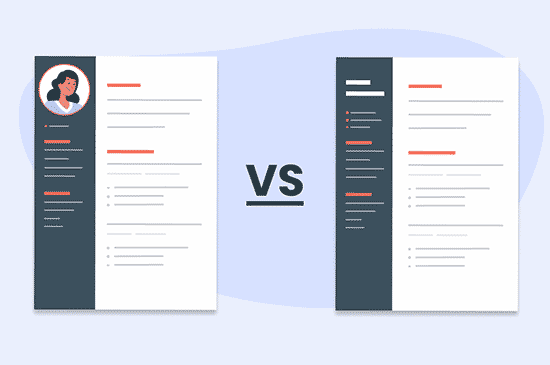
While there are hundreds of photo resume templates available online, putting a picture on your resume may hurt more than help, especially in certain regions.
If you’re applying for work in the US, the UK, or Canada, it’s best to leave your photo off your resume.
In many cases, employers in these countries will reject resumes with photos to avoid potential claims of discrimination or bias during the hiring process.
Why you shouldn’t put a photo on your resume
In some cases, including a picture on your resume can hurt your chances of getting the job.
Looking for a simple explanation? This short TikTok video breaks down why including a photo might not be the best idea. Check it out:
@resumegenius Wondering if you should add a photo to your resume? 🤔 The answer is: you shouldn’t. Here’s why ⬆️ #resumetips #careeradvice #jobsearchtips #jobsearching #resume ♬ Strawberry – Prod. By Rose
Here are all the key reasons you shouldn’t include a photo on your resume:
1. Employers consider photos unprofessional
In North America and the UK, it’s not standard practice to include a photo of yourself on your resume. In fact, most hiring managers consider it unprofessional.
A photo also doesn’t say anything about your qualifications, and in most cases, it distracts from what truly matters: your skills, experience, and education.
2. Pictures may lead to hiring discrimination
Putting a photo on your resume can expose you to unconscious bias or even discrimination before you’ve had a chance to talk about your qualifications for the job.
Although workplace discrimination is illegal, it’s still commonplace in the United States. Including a picture of yourself may lead to bias based on:
- Age
- Ethnicity
- Gender
- Disability
- General appearance
3. Images aren’t ATS friendly
Many larger employers use applicant tracking systems (ATS) to screen job applications and identify qualified applicants.
These systems struggle to read nontraditional resume formats, unusual file types, and visual elements like graphics and images.
While recruiters or hiring managers can still download your resume manually, including a photo can cause issues during the initial scan. To keep your resume ATS-friendly, remove images. This not only increases your chances of getting through the system but also saves you time when re-entering information into company portals.
4. Photos waste valuable space
The final reason not to include a photo on your resume: it uses space that could be better used showcasing your hard and soft skills, education, and work experience.
When to put a picture on your resume
There are some situations when you should include a photo on your resume.
1. You work in an appearance-focused industry
In certain fields, adding a resume photo is not only acceptable but expected. If your role involves having a public presence or maintaining impeccable visual presentation, a resume photo can be beneficial.
You should include a photo if you’re writing:
- an acting resume
- a modeling resume
- an influencer resume
- a musician resume
- a brand ambassador resume
- a TV broadcaster resume
Most acting and modeling jobs will ask for a set of professional headshots in your portfolio. So while adding a photo on your resume can be a nice touch, it’s not strictly necessary for the job.
2. Resume photos are culturally expected in that country
Resume photo customs vary widely around the world. If you’re applying for jobs outside North America or the UK, employers may expect or require a picture on your resume.
That said, many international companies follow or are familiar with American hiring practices and won’t mind if your resume doesn’t include a photo.
Not sure what’s expected in your country? Don’t worry: Here’s a list of countries where resume photos are common, and others where they’re not:
Use a resume photo in these countries:
- China
- Japan
- South Korea
- Philippines
- Most of Continental Europe
Don’t use a resume picture in these countries:
- United States
- Canada
- Australia
- United Kingdom
- Ireland
- The Netherlands
- Sweden
- India
3. You’re attending a networking event or conference
Adding a photo to your resume can be useful when you’re applying for a networking event or industry conference. With so many participants, a photo can help people recognize you.
Alternative places to add your professional portrait
If you have a great professional photo you’d like to show off, consider adding it to your:
- LinkedIn profile
- website
- portfolio
Professional photo dos and don’ts
If you choose to add a picture to your resume, make sure it’s professional and creates a positive first impression.
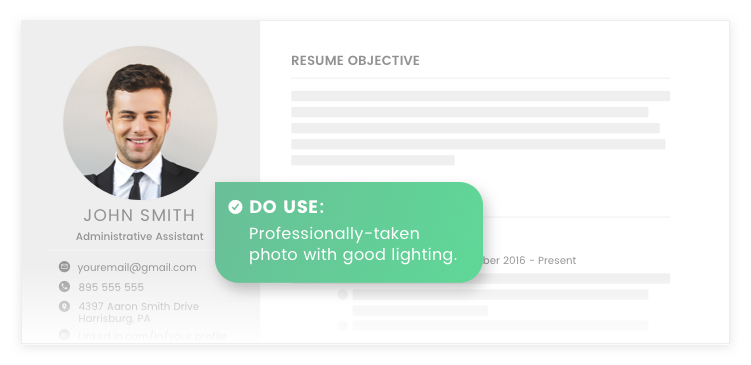
Do use a:
- Professionally-taken photo
- Photo where you’re facing straight toward the camera
- Photo with good lighting
- Photo where your face is clearly seen
- Photo of you with a friendly smile
- Photo where you’re dressed business casual
- Photo where your hair is neat and out of your face
- Photo where you’re wearing tasteful accessories
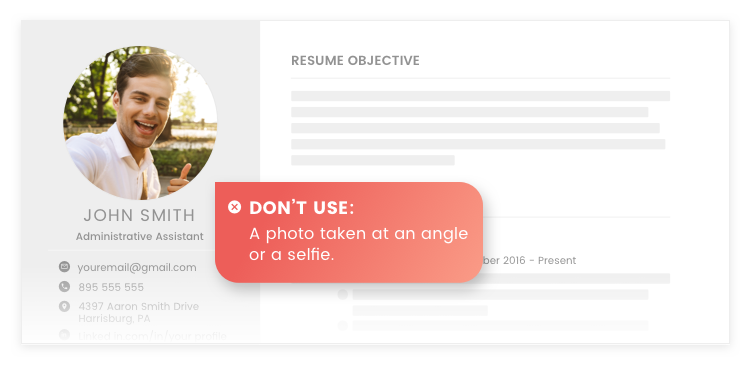
Don't use a:
- Selfie
- Photo taken at an angle
- Photo with bad or harsh lighting
- Photo where your face is obscured
- Photo where you look bored or unenthused
- Photo where you’re wearing inappropriate attire
- Photo where your hair looks unkempt
- Photo where you’re showing too many piercings, tattoos, or accessories
Build your resume with a photo now
Our AI-powered resume builder makes adding a professional photo effortless. Designed to help your application stand out, a photo resume can make a strong first impression in fields where visual presentation matters.
Choose a professional template and easily upload your photo to create a sleek, eye-catching resume that recruiters will remember. Apply with confidence, knowing your resume reflects both your qualifications and your professional image.
Make your photo resume now

Related resources
Here are some additional resources to help you write a resume that wins you an interview:
- Picture resume templates
- Simple resume templates without pictures
- The best resume format
- How to list work experience on your resume (with examples)
- 20 resume dos and don’ts
- 250+ action verbs and power words for your resume
- How to highlight relevant experience on your resume
- Resume tips to land a job in 2025
- How long should a resume be?
- One page resume: templates and formatting tips
- How to write a targeted resume
- Should your resume be in past or present tense?
- How to explain employment gaps on a resume
Click to rate this article
4.7 Average rating












Facebook
Twitter
Linkedin
Pinterest
Reddit
Copy link