


Make a high-impact skills section for your resume in seconds with our free software. Simply enter your job title and you’ll be matched with the most impactful skills for your industry.
Use these job-specific skills to make a resume that lands you interviews.
How to include skills on your resume
Once you’ve got the right skills for your resume, here’s how to highlight them the right way:
List them in your skills section
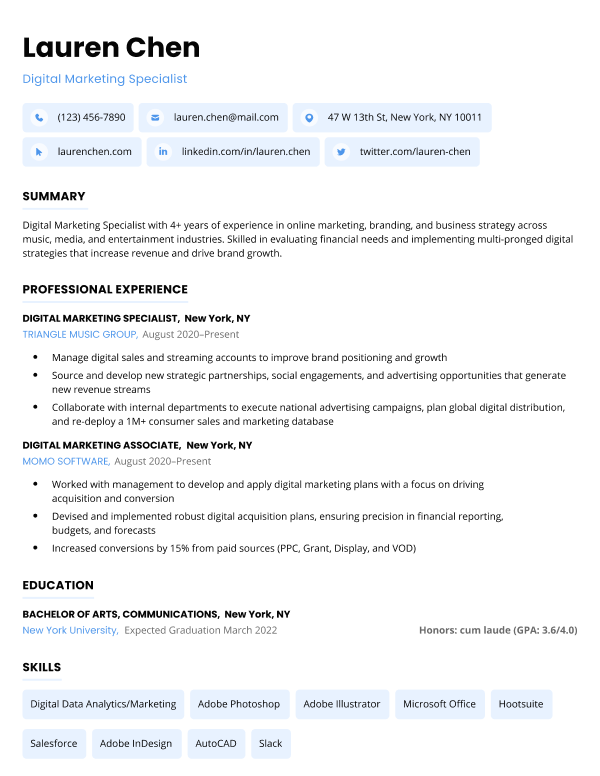
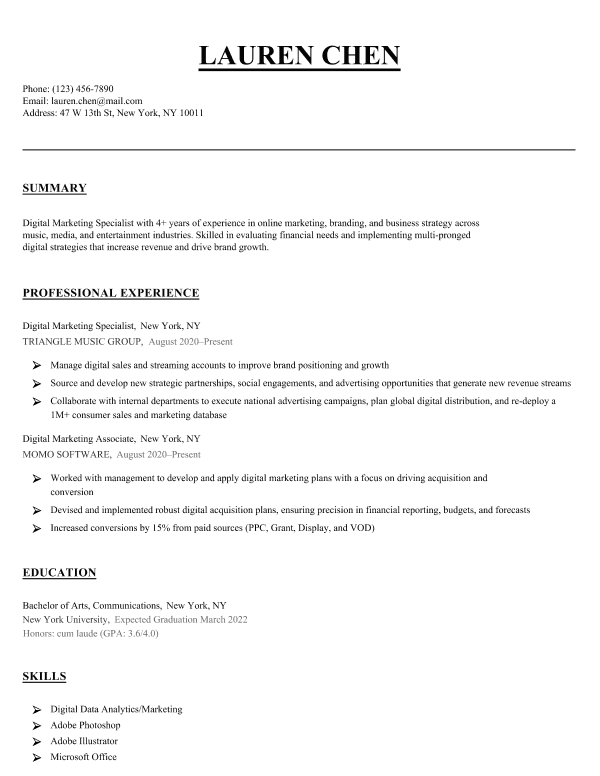
Your resume’s skills section is the most straightforward place to include your skills. This section should be easy to scan and tailored to the job you’re applying for. Use bullet points or organize skills into categories, like this:
SKILLS
- Marketing & strategy: Content strategy, SEO & SEM, Email marketing campaigns, Social media advertising, Brand development
- Technical skills: Google Analytics, Google Tag Manager, Adobe Creative Suite (Photoshop, Illustrator, InDesign), HTML/CSS Basics, CMS
- Platforms (WordPress, Webflow), Marketing Automation Tools (HubSpot, Mailchimp)
- Data & analysis: A/B Testing, CRO, Keyword research, Customer journey mapping, Excel, Tableau, Google Data Studio
- Other tools: Google Ads, Meta Business Suite, SEMrush, Ahrefs, Hotjar, Zapier, Trello
Provide context in your work experience bullet points
Your work experience section is where you bring your skills to life. Instead of just naming skills, show how you’ve applied them to create results. This helps hiring managers understand the impact you had in past roles and makes your resume far more compelling.
Whenever possible, pair a skill with a measurable outcome. This demonstrates not just what you know, but how you use it to drive success.
WORK EXPERIENCE
Digital Marketing Specialist
BrightStar Agency | June 20XX – Present
- Lead SEO strategy and implementation, resulting in a 25% increase in organic traffic over six months
- Managed email marketing campaigns with HubSpot, increasing open rates by 20% through A/B testing and segmentation
- Created custom reports in Google Analytics and Data Studio to track campaign ROI and present findings to stakeholders
Highlight key skills in your resume summary
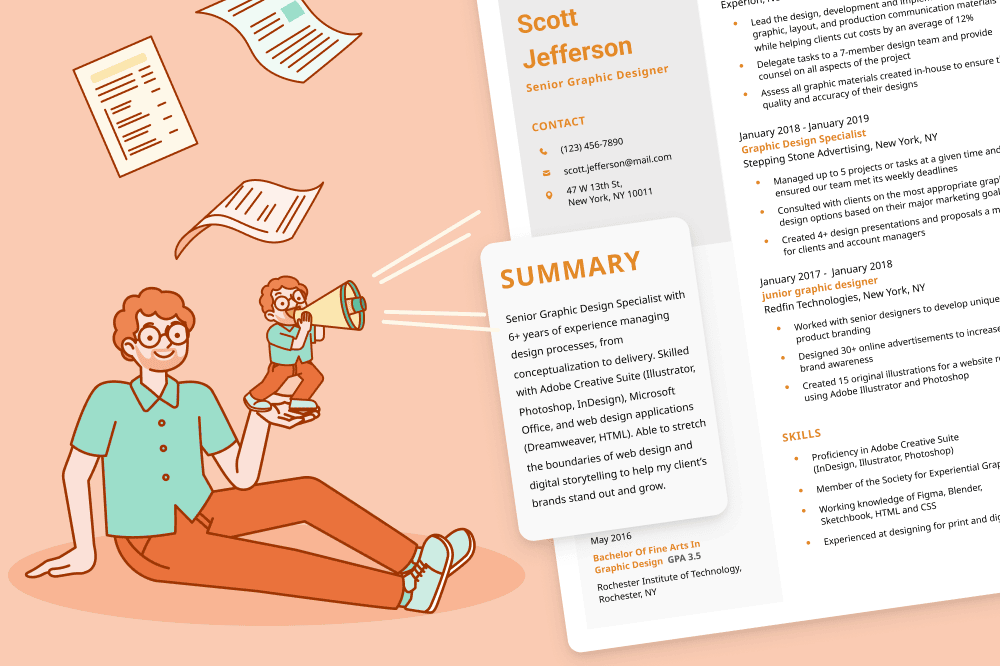
Your resume summary is a quick snapshot of who you are and what you bring to the table. It should immediately show employers that you’re a strong fit for the role by highlighting one or two of the top skills they’re looking for.
SUMMARY
Results-oriented digital marketer with 5+ years of experience specializing in SEO and performance analytics. Proven track record of increasing organic traffic and driving measurable campaign success through data-driven strategies.
Frequently asked questions
Here are some answers to common questions about adding skills to your resume:
Can I use a skills generator for any industry?
Yes, our resume skills generator is designed to work across a wide range of industries and job roles. It uses job titles or keywords you provide to tailor skill suggestions relevant to your field, whether it’s marketing, IT, healthcare, finance, or creative industries.
However, for highly specialized or technical roles, you might want to review the generated skills carefully and adjust them based on your unique expertise.
Can I edit the generated list of skills?
Absolutely! The skills generated by AI tools are suggestions meant to help you brainstorm and get ideas. You should always review and edit the list to match your true strengths and relevant experiences. Remove any skills you don’t actually have or that don’t apply to the job you’re targeting.
What kind of skills should I include in my resume?
You should include skills that are directly relevant to the job you’re applying for. These often include a mix of technical skills (like software proficiency, coding languages, or marketing tools) and industry-specific skills (such as financial analysis for accounting or patient care for nursing).
It’s best to focus on skills that align with the job description, especially those that are commonly required or are emphasized by the employer.
How many skills should I put in my skills section?
Aim to list between 5 to 10 key skills in your skills section. Too many skills can overwhelm the reader and dilute the impact of your strongest skills, while too few may not fully demonstrate your qualifications.
Make sure the skills you choose are tailored to the specific role and industry. Quality and relevance matter much more than quantity.
Should I list soft skills in my skills section?
No, you shouldn’t. The skills section is generally reserved for hard skills. While soft skills are also very important, they should be added to your work experience bullet points so you can talk about how you applied them.
What skills should not go on my resume?
Avoid listing skills that are outdated, irrelevant, or too generic. For example, skills like “Microsoft Word” might be assumed and don’t add much value unless the job specifically requires advanced proficiency. Also, don’t include skills you don’t actually have or can’t back up with experience.
Is it okay to use AI to help write my resume?
Yes, using AI tools to help write or improve your resume is completely acceptable and can be a smart way to save time or polish your application. AI can generate skill suggestions, write bullet points, and help with formatting or wording, giving you a solid foundation to work from.
However, it’s important to personalize the results generated by AI to reflect your unique experience and voice. Make sure everything is accurate, truthful, and tailored to the specific job you’re applying for.
Other resume optimization resources










Facebook
Twitter
Linkedin
Reddit
Copy link