
Theater Resume Examples & Writing Guide
 Written By Lauren MastroniDigital Content Writer
 Reviewed By Samuel JohnsSenior Content Editor & Certified Professional Resume Writer
Lauren Mastroni
Digital Content Writer
Lauren Mastroni is a Digital Content Writer dedicated to creating engaging content and providing actionable advice that empowers people in their job searches. An enthusiastic contributor to the Resume Genius...
Whether you're auditioning for your first role or returning to the spotlight, use these samples as a guide to showcase your talent and background with confidence.
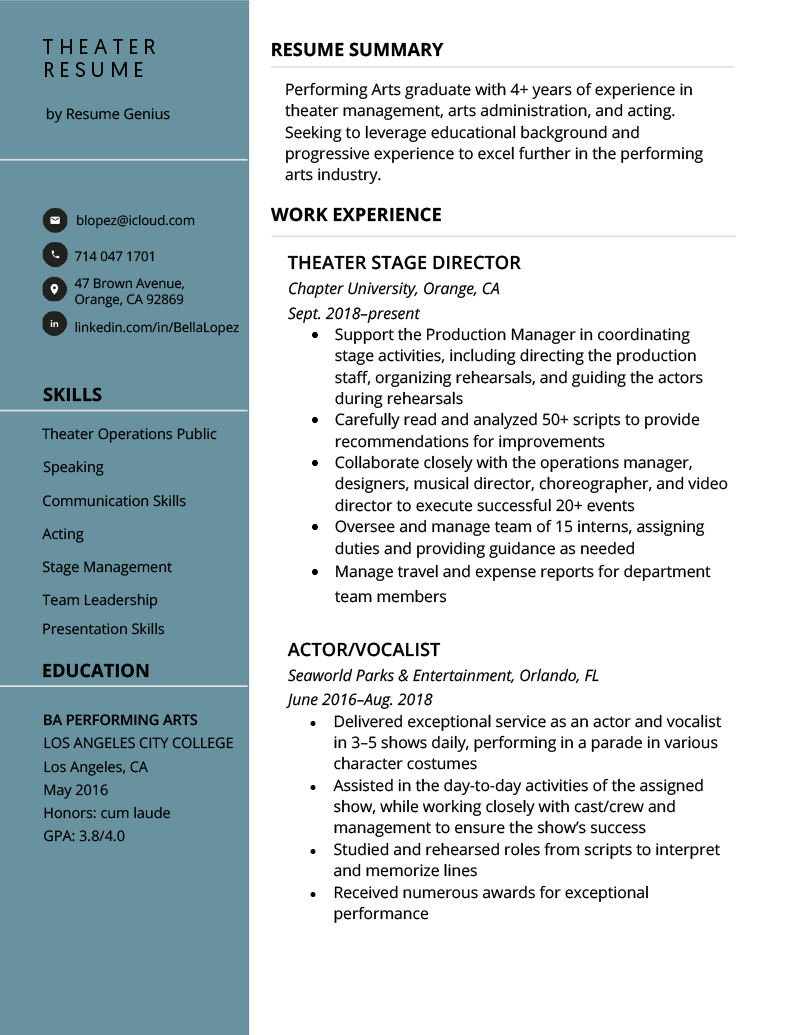

Theater resume examples by experience level
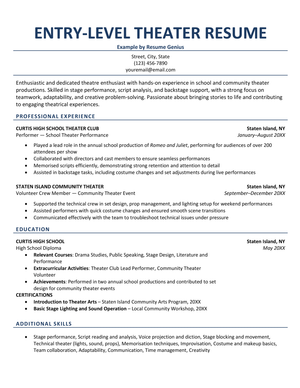
Find more designs in our collection of resume templates.
Related Resume Samples
View All Resume Samples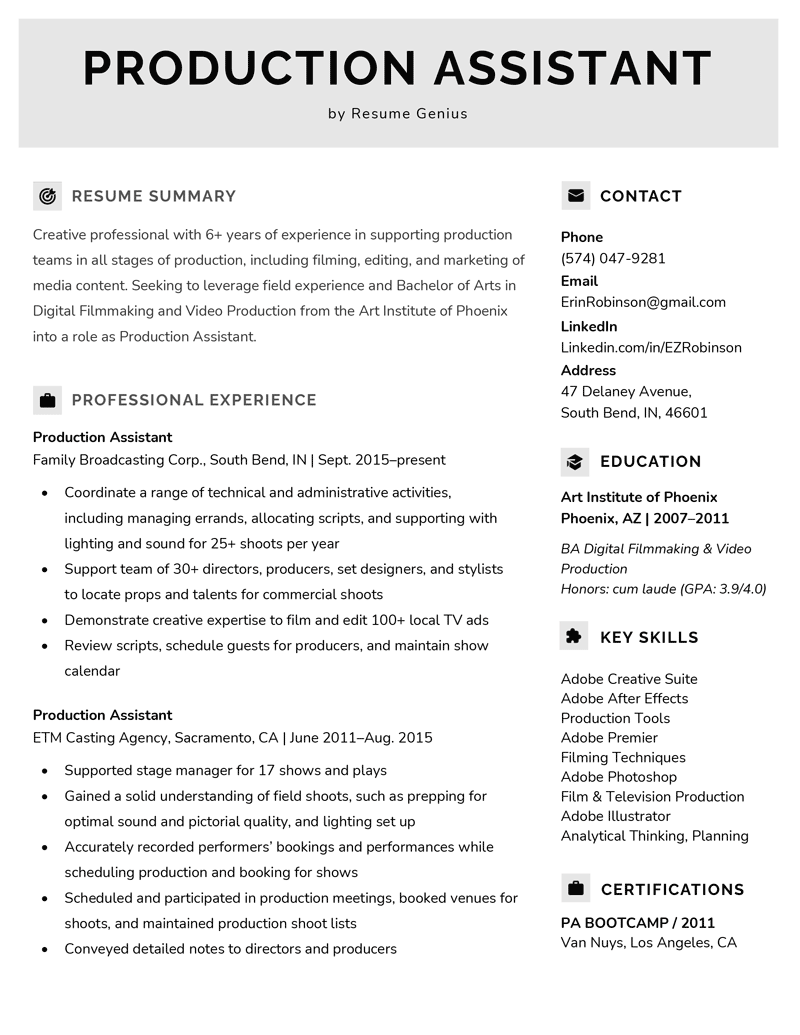
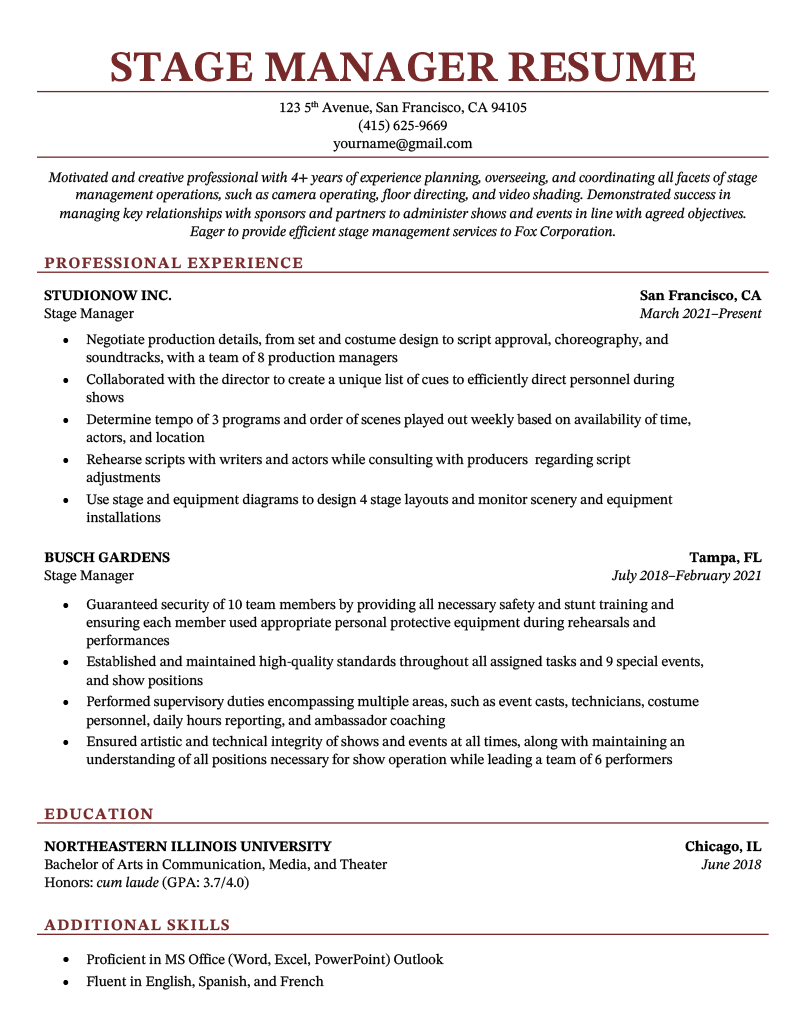
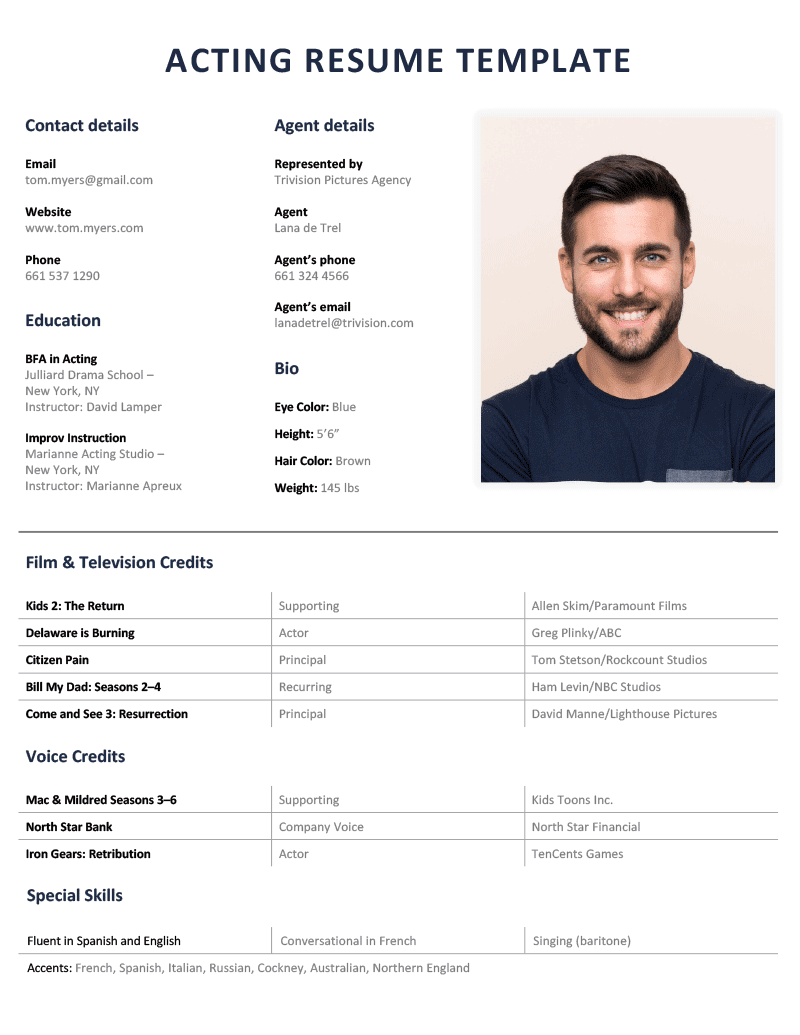
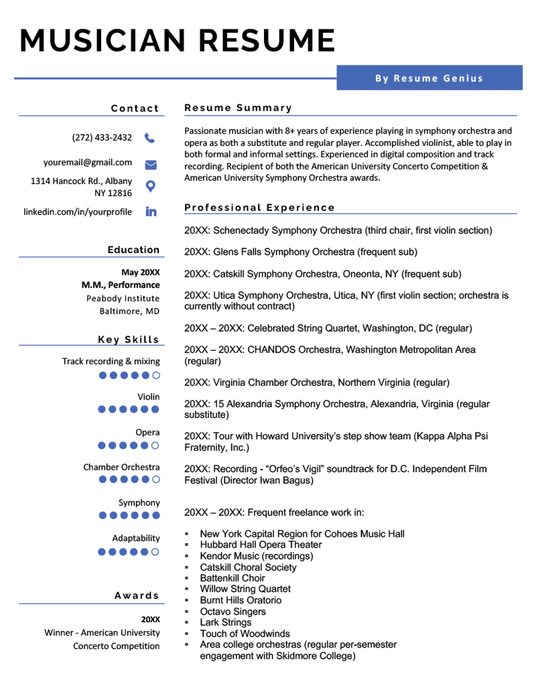
Theater resume template
- Support the Production Manager in coordinating stage activities, including directing the production staff, organizing rehearsals, and guiding the actors during rehearsals
- Carefully read and analyzed 50+ scripts to provide recommendations for improvements
- Collaborate closely with the operations manager, designers, musical director, choreographer, and video director to execute successful 20+ events
- Oversee and manage team of 15 interns, assigning duties and providing guidance as needed
- Manage travel and expense reports for department team members
- Delivered exceptional service as an actor and vocalist in 3–5 shows daily, performing in a parade in various character costumes
- Assisted in the day-to-day activities of the assigned show, while working closely with cast/crew and management to ensure the show’s success
- Studied and rehearsed roles from scripts to interpret and memorize lines
- Received numerous awards for exceptional performance
- Theater Operations
- Public Speaking
- Communication Skills
- Acting
- Stage Management
- Team Leadership
- Presentation Skills
How to write a theater resume
When applying for theater jobs, emphasize your past experience, including any performances you’ve participated in, roles you’ve played, and any relevant responsibilities. If you don’t have relevant work experience, highlight amateur productions you’ve taken part in and relevant experience from school.
1. Highlight your skills
If you’ve developed onstage or backstage theater skills, the skills section of your resume is where you emphasize them. Skills sections are short and list your most relevant skills.
The skills you emphasize may differ if you’re applying for a performing role or a technical position. Some skills you may want to list include performance-related skills like:
- acting
- singing
- dancing
Or technical skills such as:
- props
- costumes
- lighting
- technology
Other skills that apply to both onstage and backstage roles include:
- teamwork
- good work ethic
- communication skills
- time management skills
- interpersonal skills
Depending on the position you’re applying for, the skills section is a great way to highlight talents that you’ll display in full force during an audition.
2. Choose the optimal resume format
If you have a lot of experience working in theaters, use a chronological resume format. This resume format allows you to showcase your most recent theater work, and the hiring manager can see the progression of your roles and experience.
If you don’t have relevant professional experience, consider using a combination resume format that emphasizes a mix of skills and education relevant to the job opening.
3. Keep it simple
You may be tempted to highlight your creative side when it comes to your resume, especially if you have an artistic personality.
You should choose a clean, clear format, without frills and other distractions because a simpler format ensures your resume gets past applicant tracking systems (ATS) and is seen by a hiring manager. This software scans for resume keywords but can be confused by complicated layouts and infographics.
4. Don’t be afraid of blank space
Your theater resume should be comprehensive but to the point. Don’t add additional information to your resume just to fill up the page. Instead, focus only on the skills and experiences that are relevant to the job. Your talent will speak for itself when it comes time to audition.
Even if you don’t have extensive professional experience in theater, a concise resume isn’t necessarily bad. A short one-page resume gives directors all the important information they need about your experience, skills, and talents to decide whether to call you in for an audition.
Build your resume in minutes

Click to rate this article
4.6 Average rating















Facebook
Twitter
Linkedin
Pinterest
Reddit
Copy link